


As a number of presenters talked about engaging new fans at the 2026 edition of The Jockey Club's Round Table on Matters Pertaining to Racing Aug. 6 in Saratoga Springs, N.Y., marketing expert Victoria Edwards noted that young people at least are aware of racing.
In a discussion with Dan Tordjman, president of TJC Media Ventures and America's Best Racing, on developing a national marketing campaign for racing, Edwards, founder of Frankie Jean Group, said the challenge for racing is finding ways to sustain that interest from potential new fans, including the 24 million who made this year's Kentucky Derby (G1) the most-watched of the century.
"Racing can get a hot date, but they cannot stay in a committed relationship," Edwards said. "You are getting ghosted."
That first part of the equation—awareness—is important. Edwards noted some sports and entertainment ventures have to completely introduce themselves to fans so at least racing has a more-established starting point. She said the results were fascinating from a survey of 25-45-year-olds from New York, Los Angeles, Miami, Houston, and Chicago, evenly divided among men and women, that included casual bettors, racegoers, and non-racegoers.
"The absolute overall theme was that they know horse racing exists, but they do not know how to access it," Edwards said. "They don't know how to engage, and they do not see it pop up in their world. They are not rejecting the sport, but it is totally absent from their consideration set right now."
Edwards recommended a campaign that moves away from radio and television advertising to largely focus on platforms such as YouTube and TikTok. She said responders didn't bring up negative feelings about the sport, such as safety concerns, and noted they enjoyed many of the aspects tied to racing, such as dressing up, fashion, a day out with friends, and understanding betting.
"Nobody in this survey needed convincing," Edwards said. "They needed inviting, in a way that speaks to their wants and speaks directly to them."
Round Table keynote speaker Greg Maffei believes the Horse Racing League, and racing in general, can reach these potential fans. Maffei brings a proven record of building massive interest in Formula 1 auto racing in part through a show, "Formula 1: Drive to Survive," and social media that connected viewers with the competitors' stories. The former CEO of Liberty Media brings that expertise to racing with the HRL, of which he is a co-founder, along with Skylark founder Danny Epstien.
READ: Maffei Optimistic About Building Interest in Racing
Maffei said the types of efforts that spiked interest in F1 can be applied to horse racing by keeping fans engaged in the sport's stories. He said that type of connection is needed, and noted that betting will be part of that. The HRL plans to offer new approaches to simplify things on the wagering and handicapping side for new players.
READ: Horsepower: Maffei Aims for F1-Type Success With Racing
Noting the many challenges that were addressed at Thursday morning's conference, he said the bottom-line solution for many of these issues is building interest in the sport.
"Horse racing has a demand problem. It doesn't have enough new fans coming in," Maffei said. "I think that's what we really need."
Speaker Joe Appelbaum, who headed the New York Thoroughbred Horsemen's Association from 2017-23, has been an owner/breeder for many years, and currently is the CEO of Waigr, which looks to put better handicapping information and approaches in the hands of players. He said building engagement also is needed to bring more owners into the sport.
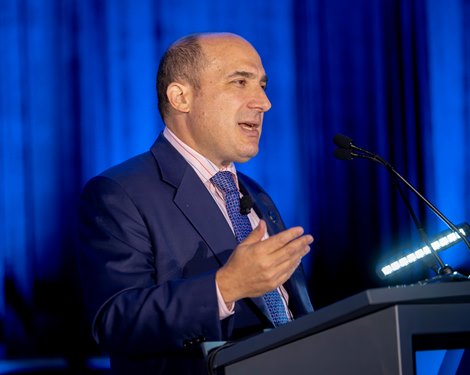
He noted that if you just look at the economics of racing, there's never been a better time to campaign a Thoroughbred but, despite that, 39% of owners leave the game after the first year and 79% do not stick around five years.
"Horse racing is distributing more money per start and per horse than we ever have," Appelbaum said. "Owning a racehorse has always been a speculative financial endeavor but, in relative terms, the economics are better today than ever. Despite this, owners are voting with their feet."
Appelbaum believes the reason for the seemingly contradictory trends is that while owners like to have success, a driving factor for their interest in the sport is the experience. He noted the success of various partnerships and syndicates that fare well in these areas by keeping partners up to date on horses, offering special events at tracks, and meetings with trainers. He called it "access, expertise, and camaraderie."
Appelbaum said this approach needs to become the norm.
"(The partnerships) are proving that owners are willing to pay a premium if you give them community, communication, and an insider's view," Appelbaum said. "In this data ... it doesn't just show us the problem; it also suggests some ideas for the future."
Japan racing benefits from some of the most-engaged fans in the world. Tom Hashimoto, general manager for the New York office of the Japan Racing Association, said it's important to reach beyond the sport's traditional fanbase. He said finding ways to make racing part of young people's lives is important, and he cited such efforts as a successful mobile wagering platform, celebrity promotions, and investment in track facilities to make a day at the races an enjoyable overall experience.
He noted that the JRA has benefited in recent years from a popular, fictional television show, "Passing the Reins," that is set in the racing world; and even a popular game and anime series, "Umamusume: Pretty Derby," which has garnered worldwide interest as the characters compete at JRA tracks and carry names of actual horses.
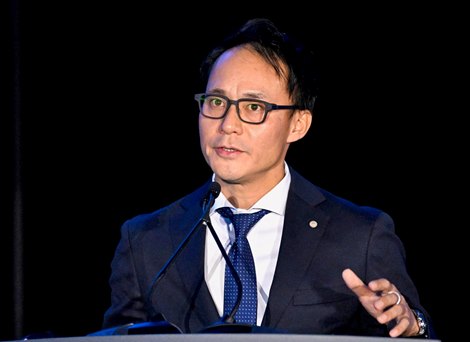
Hashimoto said the JRA has worked hard to offer a good experience, specifically for women, who give live racing a chance.
"In Japan, young women play an influential role in shaping consumer trends," Hashimoto said. "Recognizing this, the JRA has introduced female-focused spaces at the racetrack, known as umajo spots. These spaces combine racing with lifestyle and leisure experiences, provide guidance on how to press bets, while also offering drinks and sweets, interaction with miniature horses and retired racehorses, behind-the-scenes experiences, and creative workshops.
"These are just a few examples of the wide range of initiatives JRA has undertaken to make 'racing pop'; make it more familiar, more accessible, and more present in people's everyday lives."
The Jockey Club chair, Everett Dobson, said racing has to reach new fans and applauded efforts such as Maffei's racing league and the ideas presented Thursday morning.
"None of this is going to work without real investment in how we market and package the sport," Dobson said. "It's the difference between a great product nobody hears about, and one that finds the audience it deserves."