


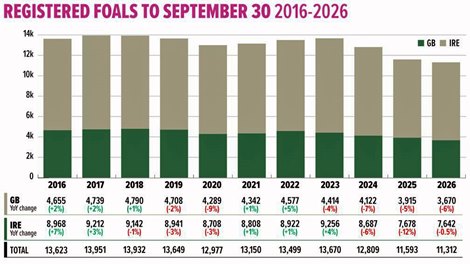
The British and Irish foal crop has declined by a further 2.4% this year, according to Weatherbys' official Return of Mares for 2026.
The number of foals registered between the two countries this year is 11,312, down from 11,593 12 months ago. It is, at least, not as dramatic a downturn as the previous window, with the foal crop having dropped more than 9% during that period, from 12,809.
The decline is sharpest in Britain, which has dropped another 6% overall, from 3,915 to 3,670. In Ireland, where the total had slumped 12% a year ago, the reduction was 0.5% to 7,642 from 7,678.
Weatherbys' publication also reveals news on a decrease in the number of registered broodmares in both Britain and Ireland, down almost 4% from 20,337 to 19,585, with similar-sized drops in both countries individually. The number of stallions standing in Britain increased by one to 90, while it dropped by eight in Ireland to 133.
One small positive bit of news was that the number of British broodmares covered this year actually increased from 5,481 to 5,687, with this correspondingly being an improved percentage of the active broodmare band of 82.6%. In Ireland, however, the number dropped marginally to 10,056 from 10,251.
The figures continue a downward trajectory of the foal crop experienced in both countries through the past three years, following a brief recovery in 2021 and 2022. The news follows a recent release by The Jockey Club in the United States revealing a similar story.
In response to the figures released Oct. 20 by Weatherbys, the Thoroughbred Breeders' Association's chief executive Naomi Mellor said: "The decline in the British foal crop this year is in line with our predictions and reinforces the scale of the challenge facing the domestic breeding industry, but there are reasons to be optimistic.
"While the active broodmare population is significantly down, the increase in the number of British mares covered this year offers some encouragement and is a vital first step toward stabilizing the foal crop.
"As we have consistently highlighted, a healthy and sustainable breeding industry is fundamental to ensuring a healthy and successful racing industry and it has been encouraging to see greater recognition of this across the sport. In particular, our work with the High Quality Horse Group has resulted in the recent increased investment in developmental races along with further enhancements to the Great British Bonus scheme, both of which represent positive steps forward.
"As an industry, we must continue to work collectively to improve the economic viability of breeding, stimulate demand for British-bred horses, and give breeders the confidence to invest."
Philip Newton, chairman of the TBA, has been warning about the situation for some time and in May 2025 shared modelling data with the Racing Post. The 2026 crop is not as apocalyptic as the worst-case scenario from that prediction, but not much better. Newton's reasons for the foal crop falling in Britain are wide-ranging, but high on the list is how difficult it is for breeders to make a profit. The TBA's research found that only 29% of the yearlings that went through the sales ring in 2024 made any money in a polarized atmosphere.
Last year, he also cited increases in National Insurance, minimum wage costs, inflationary pressures in every other aspect of costs, and uncertainties surrounding inheritance tax. However, Newton spoke again at last month's TBA annual general meeting and sounded more optimistic that the wider industry was finally accepting the need to arrest the decline, which would be part of a long-term strategy.