


While the New York Racing Association staged its longest meet at Saratoga Race Course this summer, it also proved to be one of the safest in the iconic racetrack's 163-year history.
According to New York State Gaming Commission data, there were no official racing fatalities during the 45 days of racing at the Spa based on the standards in place that ensure consistency in reporting of equine safety numbers from jurisdiction to jurisdiction.
"Those 2026 numbers are very encouraging," said Lisa Lazarus, CEO of the Horseracing Integrity and Safety Authority. "The team on the ground at NYRA and the New York (Gaming) Commission does a terrific job. But it also shows that the regulatory system that HISA has brought in is yielding positive results that everybody hoped it would. It hasn't taken us a whole lot of time to dramatically reduce the fatality rate at HISA tracks and work closely with veterinarians across the country to implement the rules."
While pleased with the improvements this year, New York racing and regulatory officials did not want to characterize the summer meet as free of equine fatalities as one horse who suffered a catastrophic injury during a race (Marvelous Madison) was euthanized after the state's 72-hour standard used to determine what is considered a racetrack fatality. There also were four training fatalities, with two listed as sudden deaths.
So New York racing and regulatory officials know there's still work to be done, but the figures mark a dramatic improvement from 2025, which saw five reported racing fatalities and five training deaths.
Also of note: The 2026 racing figures were recorded over a longer meeting than last year. They were based on 464 races from July 3-Sept. 7 with 3,675 starts, as compared with 3,201 starts over 420 races on 40 dates in 2025.
Dr. Scott Palmer, equine medical director for the NYSGC, was delighted with the Spa's improved safety numbers. He noted that many people play a part in ensuring equine safety.
"Safety is my No. 1 priority, so I am always excited when we have a good meet like we did at Saratoga. I am delighted by that," he said. "What I can say about it is that safety is a team sport and it takes a lot of people doing good work to make it happen. Safe racing is a product of conscientious race and risk management because there are risks involved in racing, just like any part of life. If you go back to 2011 and 2012, since then we have really been working at this. Credit to HISA across the nation because it's a federal law.
"But what we are doing now boils down to having a culture of safety. Everyone is working together now and we are making headway."
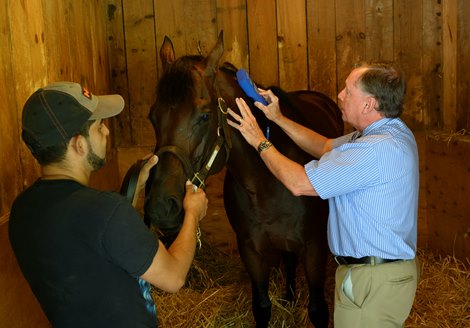
Lazarus praised improved awareness on safety issues that also has been a factor in lower fatality rates across the industry during the past decade.
"You can never tie numbers like this to one thing, but I believe strongly that HISA plays a significant role," she said. "Also, just the consciousness around horse welfare has really been elevated in the last four-to-five years and that's made a difference as well."
Veterinarian scratches have been a source of some concern at NYRA (and other tracks), but Palmer said the added vigilance has played a key role in the improved safety numbers because vets can now rely more heavily on a horse's medical history in making decisions.
"Veterinary oversight and informed veterinary oversight come into play with all of this. We now have the ability to gather information that tells us a story," he said. "You know with some of these horses that if they look questionable on race day, and if you're not sure if a horse is fit to race, the medical history can sometimes change the way you look at the horse."
Palmer also pointed out that fatality numbers the past two full years in New York already were below the national average. The Saratoga meet added to that improvement this year.
Still, Palmer, HISA and others are aiming for more improvement.
"I want zero fatalities," Palmer said. "People tell me it will never happen, but it's what I want to work toward."