
The long wait for live horse racing to return to Kansas will finally come to a close Oct. 17 when the starting gate pops open for a 250-yard Quarter Horse dash in the opening race at Eureka Downs, and that moment will likely be emotional for many in attendance.
"When that first race goes, there's going to be a few people shedding some tears," Eureka Downs general manager Mike Weiss said on Episode 88 of the BloodHorse Monday podcast. "For diehard racing fans like all of us, it feels good to just bring the sport alive again in a lot of places where it's going away."
A 10-race card will welcome racing back to Kansas, which has not had a Thoroughbred race since 2008. Eureka Downs seemingly closed its doors for good in 2011 but now, 15 years later, the horses are back and ready to compete.
That change was thanks to Gov. Laura Kelly signing into law last year a statute that would distribute a 3% tax on Historical Horse Racing machine gaming. That 3% will go to support horse racing in the state, with 30% going to the Kansas Horse Breeding Development Fund and 70% going to the Fair Horse Racing Benefit Fund, which will provide for purse supplements, capital improvements, and operating expenditures.
HHR was legalized in Kansas in 2022, authorizing the use of 1,000 machines at a site in Sedgwick County, which includes Wichita. The result was the opening of Gilley's Gambling Hall in December 2025, which was developed by billionaire Phil Ruffin at the site of the old Wichita Greyhound Park.
READ: Kansas' Approval of HHR Paves Road for Racing's Return
Ruffin was one of those instrumental in trying to get racing back in the state, making a bid in the mid-2010s to have slot machines installed at The Woodlands in Kansas City, which also ran its last race in 2008. Despite that bid being unsuccessful, Ruffin and other industry stakeholders and politicians stuck with it, and the new law reflects that perseverance to bring back a sport that has a storied history in Kansas, and one of America's oldest racing venues still in existence. Eureka Downs was originally built in 1872 and moved to its current location in 1902.
"There's been a contingent of Quarter Horse people, Paul and Virginia Treadwell were very active in keeping that voice active," Kansas Thoroughbred Association president Jeff Wyrick said. "We had enough political response and we were able to get that percentage out of Gilley's. It's going to be a real opportunity."
Initial Meet
The reestablishing meet at the track owned and operated by the Greenwood County Fair Association will consist of six days—Oct. 17-18, 24-25, 31, and Nov. 1—of mixed breed racing. In the condition book, all six days offered four Thoroughbred races, four Quarter Horse races, one Arabian race, and one for Paints and Appaloosas over the 5-furlong track for which the state budgeted $2 million toward renovating. Each day also has several substitute options should any of those races not fill.
Drawn Oct. 14, the opening day card will host five Quarter Horse races, four Thoroughbred races, and close out with an Arabian maiden race. The average number of entries was 8.4 per race (an average of seven per race when not including also-eligibles in three Quarter Horse races, which are limited to eight starters) and the day features an average purse of $24,100. The four Thoroughbred races—three claiming races and a starter allowance—average a $16,500 purse and seven entries. After early scratches, 68 horses are entered in the 10 races, with 26 starters in the four Thoroughbred races.
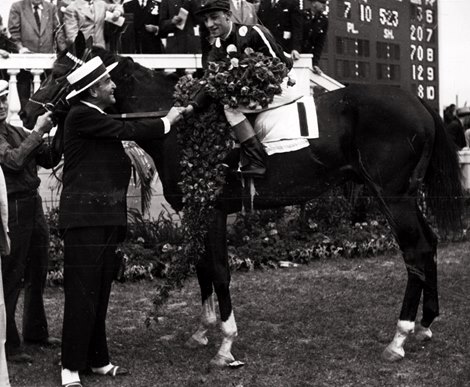
Not including substitute races, the average purse, per the condition book, for the remaining five days is $26,180. The 20 remaining Thoroughbred races scheduled for the meet average a purse of $23,900 and include the Nov. 1 Lawrin Stakes—named for the only Kansas-bred to win the Kentucky Derby—for Kansas-bred 3-year-olds and up worth $50,000 over 6 furlongs. The Oct. 31 Paul and Virginia Treadwell Stakes for Quarter Horses is the meet's richest race with a $75,000 purse.
The state approved 44 days of racing in Kansas but, as the program is kicking back up, stakeholders are taking the gradual approach despite the excitement and not diving too deep too quick.
"When I start putting things together, I'm thinking of Year 3 and start working backwards," Weiss said. "That's the way I believe it needed to be built, in levels."
Expansion in the Future
Weiss has served several roles in track management at tracks such as Beulah Park in Ohio and Rillito Park in Arizona, and has overseen Advanced Deposit Wagering companies AmericaTab, which was later purchased by Churchill Downs Inc., and Avatar Ventures/Darkhorsebet, which was purchased by Xpressbet.
He also has experience in overseeing racing get off the ground at new venues, serving as director of racing at the new Birmingham Race Course in 1991 in Alabama and as manager of the North Dakota Horse Park when the North Dakota Racing Commission reinstituted racing in 2012 after a long absence.
Weiss said he is hopeful that racing will increase to 12-20 days in Year 2, and up to as many as 40 by Year 4, if HHR projections are met. There is also no commitment to staying put in October.
"You have to place it where it will fit best with the rest of the country," Weiss said. "The purses are pretty good for the first year, but it's only six days. Let's continue it and keep it growing, and see if Kansas can be what it was legislatively set out to be."
Wyrick said moving forward, he would almost advocate for slightly smaller purses in favor of adding more days.
"Get to where we have more locally-owned horses where we can compete against ourselves," Wyrick said. "I feel like that's how we're going to get the Kansas people interested is if they can actually get a horse and be somewhat competitive."
Simulcast signals will not be exported out of state for the meet, Weiss said before adding the goal would be to begin exporting in a few years if the purses keep growing. Still, he plans to have the track feature a Rainbow 6-style wager, which he began at Beulah Park under the name Fortune Six, for those wagering in state.
"Three-thousand dollars is not a lot of money to you and I without the export, but to these people here seeing a 20-cent bet with a $3,000 pot, there's already talk about it," Weiss said.
Both Weiss and Wyrick said they have received plenty of interest from horsemen in nearby states such as Nebraska, Iowa, Oklahoma, and Colorado. Tracks such as Canterbury Park in Minnesota and Prairie Meadows in Iowa have also completed their 2026 seasons in the last month, leading to Eureka Downs having an advantageous spot on this year's calendar, as those owners and trainers seek opportunities for their horses.
Thoroughbreds entered on opening day last raced at Remington Park in Oklahoma (eight), Prairie Meadows (seven), Atokad in Nebraska (two), Harrah's Columbus Nebraska (two), Louisiana Downs (two), Arapahoe in Colorado (one), Fairmount Park in Illinois (one), Gillespie Fairground in Texas (one), Hawthorne in Illinois (one), Legacy Downs in Nebraska (one), Sweetwater Downs in Wyoming (one), and Turf Paradise in Arizona (one).
"It's amazing, some of the big stables that are calling and looking at the big purses and saying we want to bring horses here," Weiss said. "I think what the next move is for this track is that we need barns. ... There's very few stalls on the grounds and they need to use some of that money to rebuild the barns. That's really important to go forward and grow the way it should be."
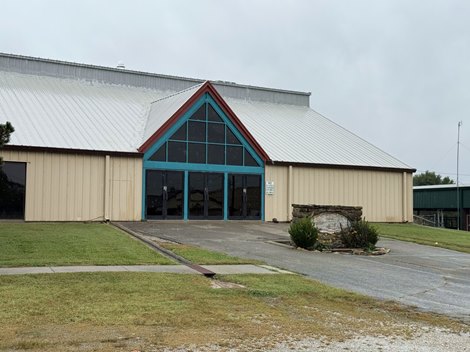
Eureka Downs' barns greatly deteriorated over the years, and Weiss praised the excited horsemen of the state jumping in and volunteering to fix them up over the last year to make them usable for the meet. There are 140 stalls in total, with 36 devoted to regular stabling and the rest committed to haul-in horses.
Kick-Starting a Breeding Program
As new barns are built and the stabling number increases, the goal would be to start finding a plethora of Kansas-bred horses on the backside. The Kansas Thoroughbred breeding program is virtually nonexistent, which should come as no surprise given the state has not had racing in nearly two decades. Jockey Club records released Oct. 13 show only five mares were bred in the state in 2026. Further, Kansas only had seven registered foals in the 2023 crop and one in the 2024 crop, this year's 2-year-olds.
However, stakeholders believe the return of racing to Kansas and HHR machines directly contributing to a breeding fund will help kick start a revival of the state's breeding program. Weiss said since Gilley's opening in December, more than a million dollars has already been generated for the breeding fund, and that he's heard that some expected owners and breeders have recently purchased farms in Kansas.
One of Wyrick's concerns is that, with the absence of a program in Kansas for nearly two decades, a generation of potential horsemen and women were missed. Still, he hopes there is opportunity to get a younger generation involved.
"A lot of the old guard are gone, but there is an opportunity that people are going to want to breed in Kansas again," Wyrick said. "I think it will come back big and strong, and I'm excited about it being at Eureka.
"It's going to be a real opportunity to try and get a herd back. We don't have a herd of Thoroughbreds in the state right now. So that's exciting to see."
The condition book includes eight Kansas-bred Quarter Horse races and four Kansas-bred Thoroughbred races, including one stakes for each breed. Several other races are written as Kansas-bred and Kansas-owned preferred.
Weiss said he believes there are enough Quarter Horse Kansas-breds out there to fill the races—the two Kansas-bred maiden races for 2-year-olds opening day drawing seven and six entries—but is unsure there will be enough on the Thoroughbred side. So, in order to spark involvement in the industry within Kansas' borders, the track wrote several Thoroughbred and Quarter Horse races restricted to Kansas-owned runners.
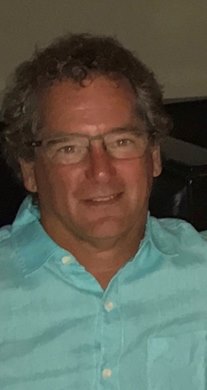
Wyrick was born and raised in Kansas and is extremely active in the community as a preacher and high school coach for football and track. He has been a longtime racing owner and is also a stakes-winning trainer. He is the owner of Breathtaking Folly, a 5-year-old Practical Joke mare out of the winning Candy Ride mare Canteen, in Saturday's second race—the first Thoroughbred race in Kansas since 2008.
Wyrick, who at 66 is excited to get his grandchildren involved in racing, said one of his goals with the KTA is to attract younger families to be involved in Kansas racing. Therefore, the Kansas-owned races will play an integral part in populating the state by allowing new members of the industry to have opportunities to not compete against bigger outfits shipping in from out of state.
"These Kansas-owned races should really be an incentive to say, 'I can go claim this horse and be ready for next year,'" Wyrick said. "That's the avenue I'm pushing people to: try to figure out how to get in the claiming game and pick up something they're competitive with."
Wyrick also sees the claiming avenue as a way to find decent bloodlines in fillies and mares out of state that can compete in Kansas-owned races, and then retire to the state's breeding program.
"In those cheaper nickel and dime claimers, you can pick up some good bloodline fillies and mares," Wyrick said. "For us to get the good blood in Kansas, it doesn't take very many."
Wyrick said the KTA plans to have a stallion auction in January to help support the program.
While there is still plenty of work to be done, there is a lot more optimism surrounding racing in Kansas than there had been for many years and, in an age where headlines are more often filled with tracks closing, a return of a track and state program once thought to be extinct should come as welcome news.
"It's been a real answered prayer for me," Wyrick said. "I've got some new grandkids, another one on the way, and it just revives your heart thinking they can see grandpa and the family involved doing this stuff and really make it a family atmosphere."